Home / Sights / Trier-Süd
UNESCO since 1986Imperial Baths (Kaiserthermen)
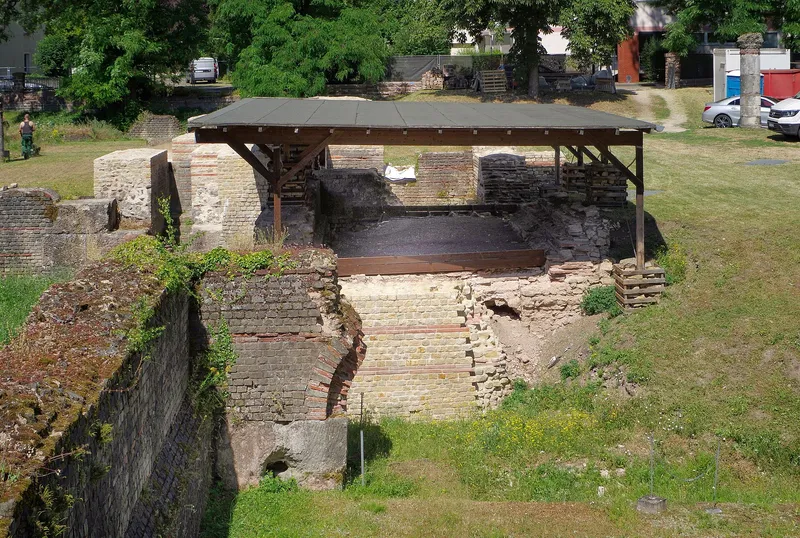
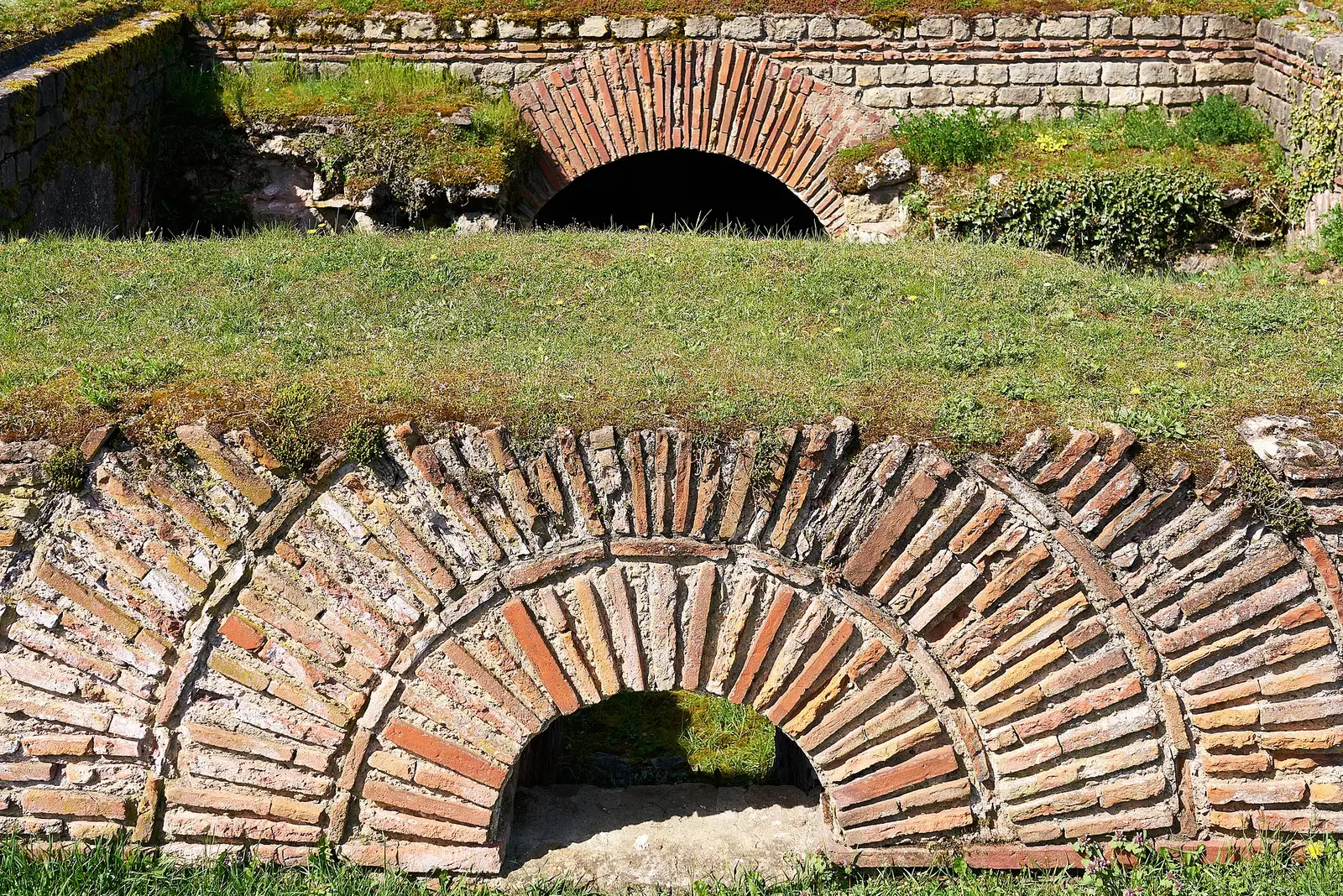
Monumental Roman bath ruins. Visitors can explore apses, hypocaust channels, and the underground service tunnels.
The Imperial Baths were built in the 4th century as the prestige thermae of the imperial residence. They were never completed as a working bath, and later served as barracks and as part of the city wall fortification. Today they are a UNESCO World Heritage site, and the underground service corridors are fully accessible.
The original plan called for a full Roman bathing complex with the classical sequence of rooms used in antiquity: an apodyterium for changing, the heated caldarium for hot bathing, the lukewarm tepidarium, the cold frigidarium, and additional sweat rooms. Heating was provided by a hypocaust, the Roman underfloor and wall heating system, in which hot air circulated beneath floors raised on small pillars. What remains visible today are above all the massive apses of the caldarium and the extensive network of underground service and supply tunnels, which once carried fuel and water to the heating facilities.
After the end of Roman rule, the complex fell into ruin and was used for centuries as a quarry for buildings in Trier. The Kaiserthermen (Imperial Baths) only returned to public attention in the 19th century: the first documented excavations began in 1818, followed in the 20th century by extensive uncovering and restoration work. Today, guided tours along with multimedia and virtual presentations supplement the visit and help visitors understand the original function of each room.
Live from Stay22
Hotels near Imperial Baths (Kaiserthermen)
Current prices and availability. All hotels within 1500 m.

Coffee Fellows Hotel Trier
1135 m entfernt
81 € / Nacht

MEA HOTEL TRIER
437 m entfernt
82 € / Nacht

Best Western Hotel Trier City
277 m entfernt
88 € / Nacht

Hotel Deutscher Hof
271 m entfernt
88 € / Nacht
* Sponsored - booking via Booking.com through the Stay22 affiliate.
Frequently asked questions about Imperial Baths (Kaiserthermen)
How much do the Kaiserthermen in Trier cost?
Admission to the Kaiserthermen (Imperial Baths) is 6 euros for adults, 5 euros reduced, and 3 euros for children and teens. If you are seeing several Roman sites, the AntikenCard pays off: Basic (18 euros) covers two Roman monuments plus the Rheinisches Landesmuseum, Premium (28 euros) covers all four Roman monuments and the museum.
When are the Kaiserthermen open?
The Kaiserthermen are open daily 9am to 6pm from April through September, until 5pm in March and October, and until 4pm from November through February.
What is there to see at the Kaiserthermen?
The site preserves the massive apses of the 4th-century imperial baths, along with the underground service tunnels, which you can walk from end to end. The complex was never finished as a working bath and later served as barracks and as a fortress. Less visited, but larger in sheer area, are the nearby Barbarathermen (Barbara Baths).
Are the Kaiserthermen a UNESCO World Heritage Site?
Yes. The Kaiserthermen have been part of the UNESCO World Heritage listing of the Roman monuments of Trier since 1986.
Nearby
More in Trier-Süd.