
Home / Sights / Trier-Süd
UNESCO since 1986Trier Amphitheater
UNESCO-listed amphitheater with underground lift shafts. In summer it hosts the Antikenfestspiele (ancient world festival).
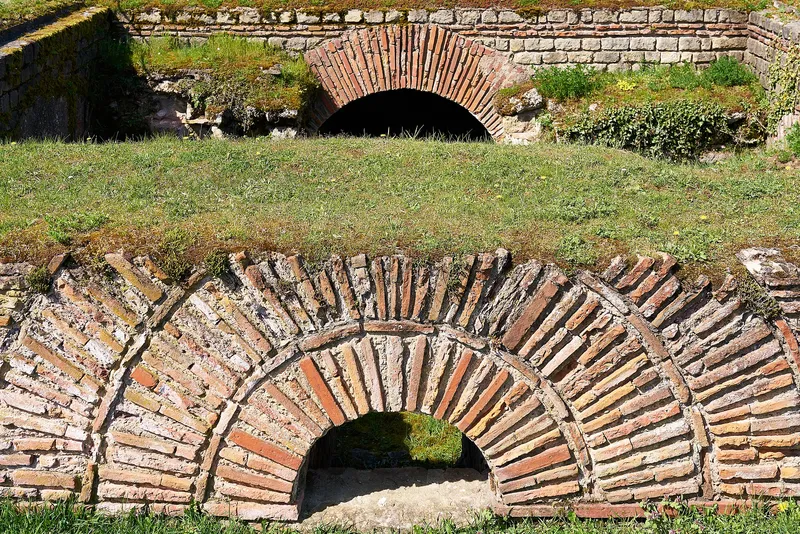
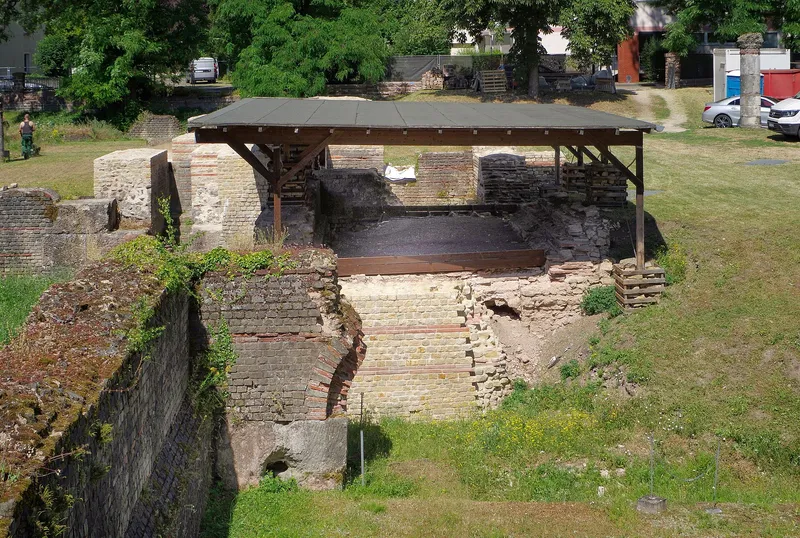
The Trier Amphitheater was built around 100 AD and seated roughly 20,000 spectators. The tiered embankments survive, along with the underground cellar with lift shafts through which gladiators and animals were brought into the arena. Each summer it serves as the venue for the Antikenfestspiele.
When building the amphitheater in the 2nd century AD, Roman engineers cleverly used the natural slope of the Petrisberg hill: part of the spectator seating was carved directly into the rock, while the rest was raised on an earth embankment. The arena itself measured about 75 meters long and 50 meters wide. Below the arena floor lay a system of corridors and chambers where animals and gladiators waited before their appearance. A central trap door with a lifting mechanism allowed animals and stage sets to be hoisted dramatically into the arena.
A day of games followed a set pattern: animal hunts in the morning, executions at midday, and gladiatorial combat as the afternoon climax. Different fighter types faced off against each other, such as the heavily armored Murmillo with his large rectangular shield, or the Retiarius armed only with a net and trident. These spectacles were not merely entertainment but demonstrations of Roman power that reinforced the social order.
After the end of Roman rule, the amphitheater fell into disrepair and was mined for centuries as a quarry. Systematic excavations began only in 1816, followed by further campaigns in 1846, and in the 1930s the site was extensively uncovered and stabilized. Today the amphitheater is part of the Roman monuments of Trier UNESCO World Heritage site and ranks among the best preserved structures of its kind north of the Alps.
Live from Stay22
Hotels near Trier Amphitheater
Current prices and availability. All hotels within 1500 m.

MEA HOTEL TRIER
821 m entfernt
82 € / Nacht

Best Western Hotel Trier City
991 m entfernt
88 € / Nacht

Hotel Deutscher Hof
989 m entfernt
88 € / Nacht

Vienna House Easy by Wyndham Trier
660 m entfernt
90 € / Nacht
* Sponsored - booking via Booking.com through the Stay22 affiliate.
Frequently asked questions about Trier Amphitheater
How much is admission to the Trier amphitheater?
Admission to the Roman amphitheater is 6 euros for adults, 5 euros reduced, and 3 euros for children and teens. The AntikenCard brings down the price per site: Basic (18 euros) covers two Roman monuments plus the Rheinisches Landesmuseum, Premium (28 euros) covers all four Roman monuments and the museum. In the summer of 2026, children and teens under 18 get in free from June 26 through August 9.
When is the Trier amphitheater open?
The amphitheater is open daily 9am to 6pm from April through September, until 5pm in March and October, and until 4pm from November through February.
How many spectators was the amphitheater built for?
Built around 100 AD, the amphitheater held roughly 20,000 spectators. What survives are the tiered seating embankments and the underground cellars with their lift shafts, which brought gladiators and animals up into the arena.
Are events held in the amphitheater?
Yes. Every summer the amphitheater is the stage for the Antikenfestspiele Trier, the city's ancient world festival. It has been part of the UNESCO World Heritage listing of the Roman monuments of Trier since 1986.
Nearby
More in Trier-Süd.