
Magazine
The Judengasse and Medieval Trier: Traces of Jewish Life
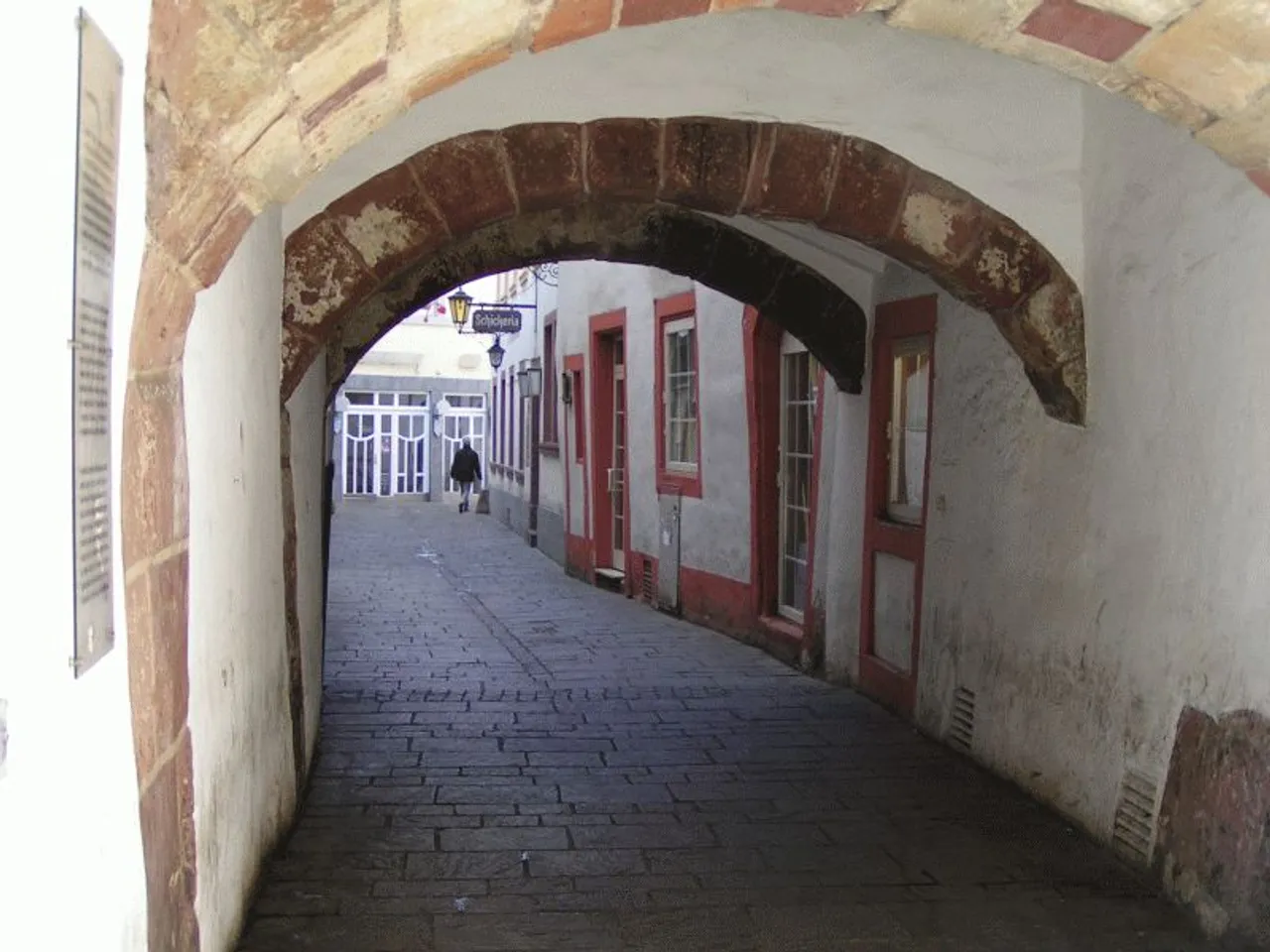
A few steps from the Hauptmarkt (the main market square) lies a quiet piece of Trier's history: the Judengasse, literally "Jews' Lane." It recalls one of the oldest Jewish communities in the German-speaking world and centuries of Jewish life that helped shape downtown Trier. Walking the narrow lane and passing through the surviving Judenpforte (the Jews' Gate) means entering a place that speaks of flourishing periods as much as of persecution and remembrance.
The beginnings of Jewish life in Trier
Jewish life in Trier can be traced deep into the Middle Ages. An established community is documented no later than the 11th century, when sources report Jews living in the city. One frequently cited, though dramatically transmitted, event is the expulsion of 1066 under the archbishop of the day, which shows there was already a Jewish population of some size.
Some accounts suggest a Jewish presence as far back as the Roman era in ancient Augusta Treverorum, today's Trier. Firm written evidence for that is missing, however, so this early trace is better treated as a possible connection than as established fact. What is not in dispute is that Trier ranks among the historic Jewish community sites of the Rhine and Moselle.
How the Judengasse developed in the Middle Ages
In the High Middle Ages, the city's Jewish quarter formed around what is now the Judengasse, within easy reach of the markets and trade routes downtown. Houses, workshops, shops, and community institutions were packed into a very small area. One point of access was the Judenpforte, a gate that makes plain how set apart such quarters were in medieval cities.
The lane was therefore much more than a residential street. It was the social and religious center of the community. Despite legal restrictions and recurring threats, the Jewish population contributed to Trier's economic and cultural life across generations.
- 12th and 13th centuries: the Jewish quarter around the Judengasse grows denser
- 14th century: a community that is economically and religiously vibrant
- Late Middle Ages: repeated persecutions and expulsions
Persecution and expulsion
The history of Trier's Jews was marked again and again by violence and expulsion. The pogroms during the Black Death around 1349 were especially devastating, when Jews in many cities of the empire were falsely blamed and persecuted. Trier was not spared that wave of violence.
Further expulsions followed in the centuries after, before Jewish life established itself in the city once more in the modern era. These ruptures are inseparable from the story of the Judengasse and are what make it a place of reflection and remembrance today.
Architecture and daily life
Building in the Jewish quarter followed the constraints of a tight site: narrow, tall houses that grew upward and backward rather than outward. Cellars and attics served as extra living and storage space, and rear courtyards often held workshops. Alongside the synagogue, a Jewish community typically maintained study houses and a mikveh, the ritual bath.
Daily life revolved around a close-knit community. The week was structured by the Sabbath, the year by Jewish festivals such as Passover and Yom Kippur. Women worked as traders, midwives, and educators and were central to holding the community together. Crafts and trade, in textiles, metalwork and jewelry, and food, formed the economic backbone of the quarter.
The synagogue and religious life
The synagogue was the heart of the community, a place of prayer, study, and gathering. Over the centuries Jewish houses of worship in Trier were destroyed and rebuilt several times, mirroring the turbulent path of the community. The modern synagogue on the Weberbach was dedicated in 1859 and badly damaged during the November pogrom of 1938. After World War II, Jewish community life returned to the same site.
Anyone trying to read the religious topography of the city will find other significant sacred buildings all around, among them the early Christian Trierer Dom (Trier Cathedral) and the nearby Liebfrauenkirche (Church of Our Lady). The Judengasse adds another layer to that picture, one that went overlooked for a long time.
Remembrance today
The city, researchers, and local initiatives keep the memory of Jewish Trier alive. The surviving Judenpforte and the traces in the streetscape invite you to pause. The Rheinisches Landesmuseum, among other institutions, covers the history and archaeology of the region and documents Trier's long settlement history from antiquity into the Middle Ages.
Guided tours, lectures, and educational programs pass this history on to new generations. If you are exploring Trier on your own, the Judengasse slots neatly into an old-town walk, for example as part of three days in Trier.
Ad
Matching offers
* Affiliate link. If you book, we may earn a commission at no extra cost to you.
Frequently asked questions
Where is the Judengasse in Trier?
The Judengasse is in downtown Trier, only a few steps from the Hauptmarkt. One of the ways in leads through the surviving Judenpforte.
How old is the Jewish community in Trier?
An established Jewish community in Trier is documented no later than the 11th century, which places the city among the most historic Jewish community sites in the German-speaking world.
What happened during the plague around 1349?
During the Black Death, pogroms against Jews broke out in many cities of the empire, where Jews were falsely blamed for the epidemic. Trier was affected by that wave of persecution as well.
Can you visit the Judengasse today?
Yes. The Judengasse and the Judenpforte are freely accessible and fit easily into an old-town walk. A guided city tour fills in the historical background.