Home / Sights / Innenstadt (Old Town)
UNESCO since 1986Porta Nigra (the Black Gate)
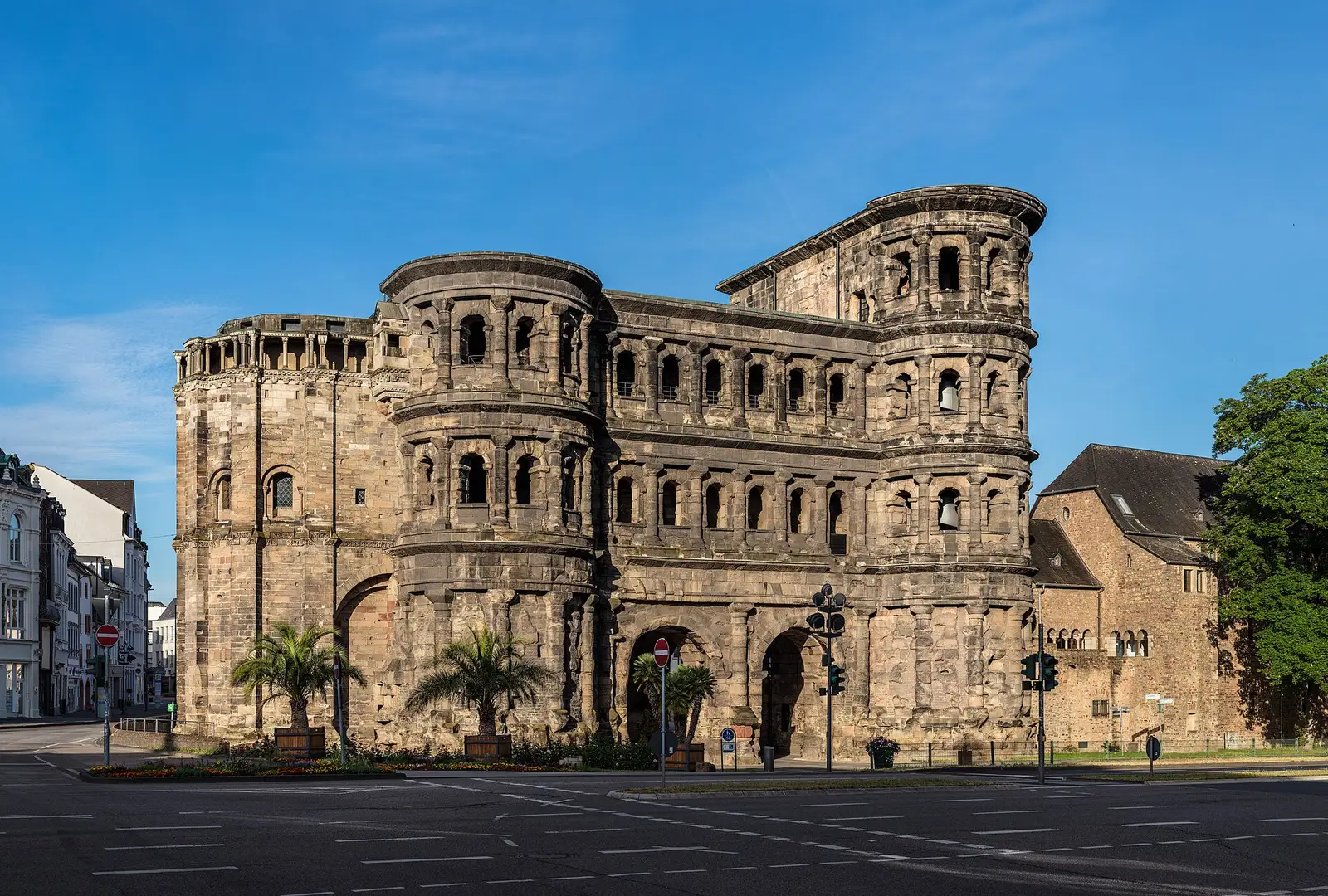
The Black Gate, Trier's landmark and the best-preserved Roman city gate north of the Alps.
The Porta Nigra was built around 170 AD as the north gate of the Roman city of Augusta Treverorum. Constructed from roughly 7,200 sandstone blocks, it was converted into a double church in the Middle Ages and stripped back to its Roman form under Napoleon. Two upper levels are open to visitors, with views down the Simeonstrasse.
The name Porta Nigra, meaning the Black Gate, has medieval origins and refers to the dark patina the pale sandstone has taken on over the centuries. The Romans used no mortar for its construction: the roughly 7,200 stone blocks were stacked dry and held together by iron clamps set in lead. Traces of this technique are still visible today in the drill holes along the outer walls.
The Porta Nigra survived at all thanks to its second life as a church. In the 11th century, the Greek hermit Simeon lived inside the structure and was buried there after his death in 1035. The gate was then converted into the double church of St. Simeon. It was Napoleon who ordered around 1804 that the building be restored to its Roman state, and the medieval additions were dismantled except for the Romanesque choir tower. The neighboring Simeonstraße still bears the saint's name today.
Since 1986, the Porta Nigra has been part of UNESCO World Heritage along with the other Roman monuments of Trier. Visitors who want to see the gate from the inside should plan for a guided tour: costumed tours with an actor dressed as a Roman centurion are among the most popular offerings and take you across both walkable floors up to the gallery overlooking the pedestrian zone. A combination ticket covering several Roman monuments pays off if you also visit the amphitheater or the Imperial Baths on the same day.
Live from Stay22
Hotels near Porta Nigra (the Black Gate)
Current prices and availability. All hotels within 1500 m.

Coffee Fellows Hotel Trier
1398 m entfernt
81 € / Nacht

MEA HOTEL TRIER
676 m entfernt
82 € / Nacht

Best Western Hotel Trier City
1091 m entfernt
88 € / Nacht

Hotel Deutscher Hof
1167 m entfernt
88 € / Nacht
* Sponsored - booking via Booking.com through the Stay22 affiliate.
Frequently asked questions about Porta Nigra (the Black Gate)
How much does it cost to visit the Porta Nigra?
Going inside and climbing the two upper levels costs 6 euros for adults, 5 euros reduced, and 3 euros for children and teens ages 6 to 18. Seeing the gate from the outside is free at any hour. If you plan to visit several Roman monuments, the AntikenCard saves money: the Basic card (18 euros) covers two Roman sites plus the Rheinisches Landesmuseum, the Premium card (28 euros) covers all four Roman sites and the museum.
What are the opening hours of the Porta Nigra?
The Porta Nigra is open year round: daily 9am to 6pm from April through September, until 5pm in March and October, and until 4pm from November through February. Current times are listed on the official site.
Why is it called the Porta Nigra?
Porta Nigra is Latin for black gate, a name that comes from the dark weathering of the sandstone. The gate went up around 170 AD as the north entrance to Augusta Treverorum, the Roman city on the Moselle river that grew into today's Trier, and it was built from roughly 7,200 stone blocks.
Is the Porta Nigra a UNESCO World Heritage Site?
Yes. The Porta Nigra has been part of the UNESCO World Heritage listing of the Roman monuments of Trier since 1986, and it is the best-preserved Roman city gate north of the Alps. The Kaiserthermen (Imperial Baths) and the amphitheater are only a few minutes' walk away.
Nearby
More in Innenstadt (Old Town).

Trier Cathedral (Dom St. Peter)
Innenstadt (Old Town) · Free admission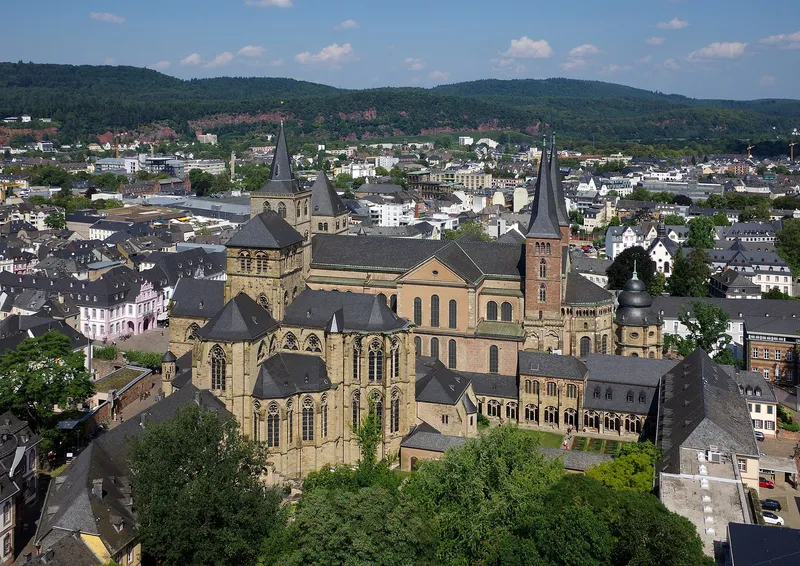
Liebfrauenkirche (Church of Our Lady)
Innenstadt (Old Town) · Free admission